
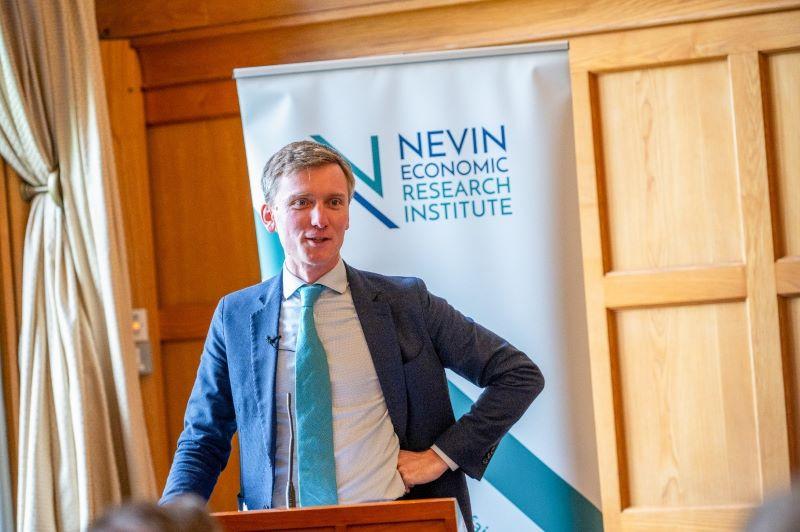

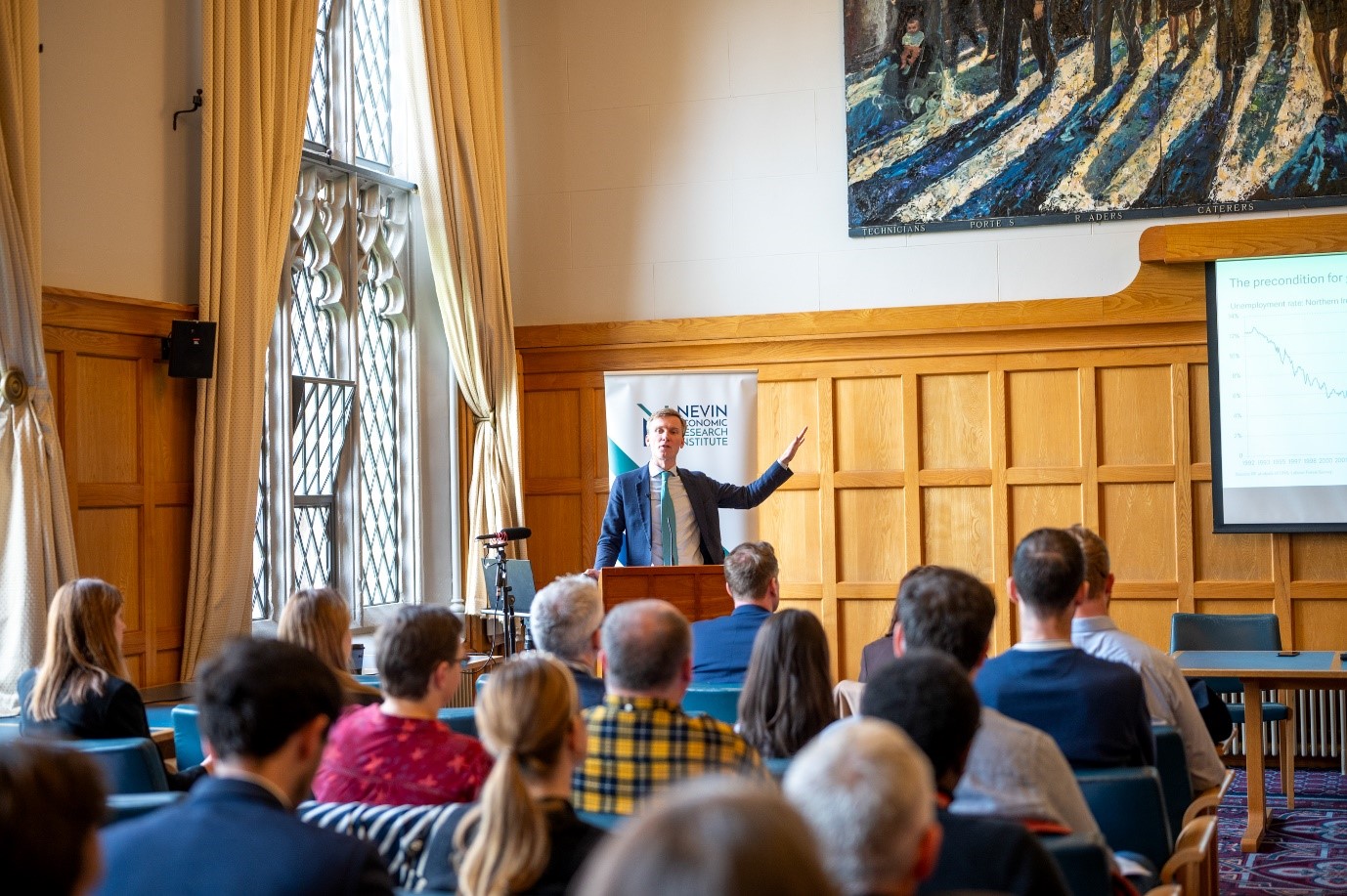
Last month we had our Annual Donal Nevin Lecture which marks an important event in our annual calendar, and allows us the opportunity to invite key thinkers in particular areas to deliver a keynote address.
The Annual Lecture began in 2013 when we had Irish President Michael D. Higgins deliver the Inaugural Lecture. We have since been privileged to have a wide range of renowned speakers deliver the lecture.
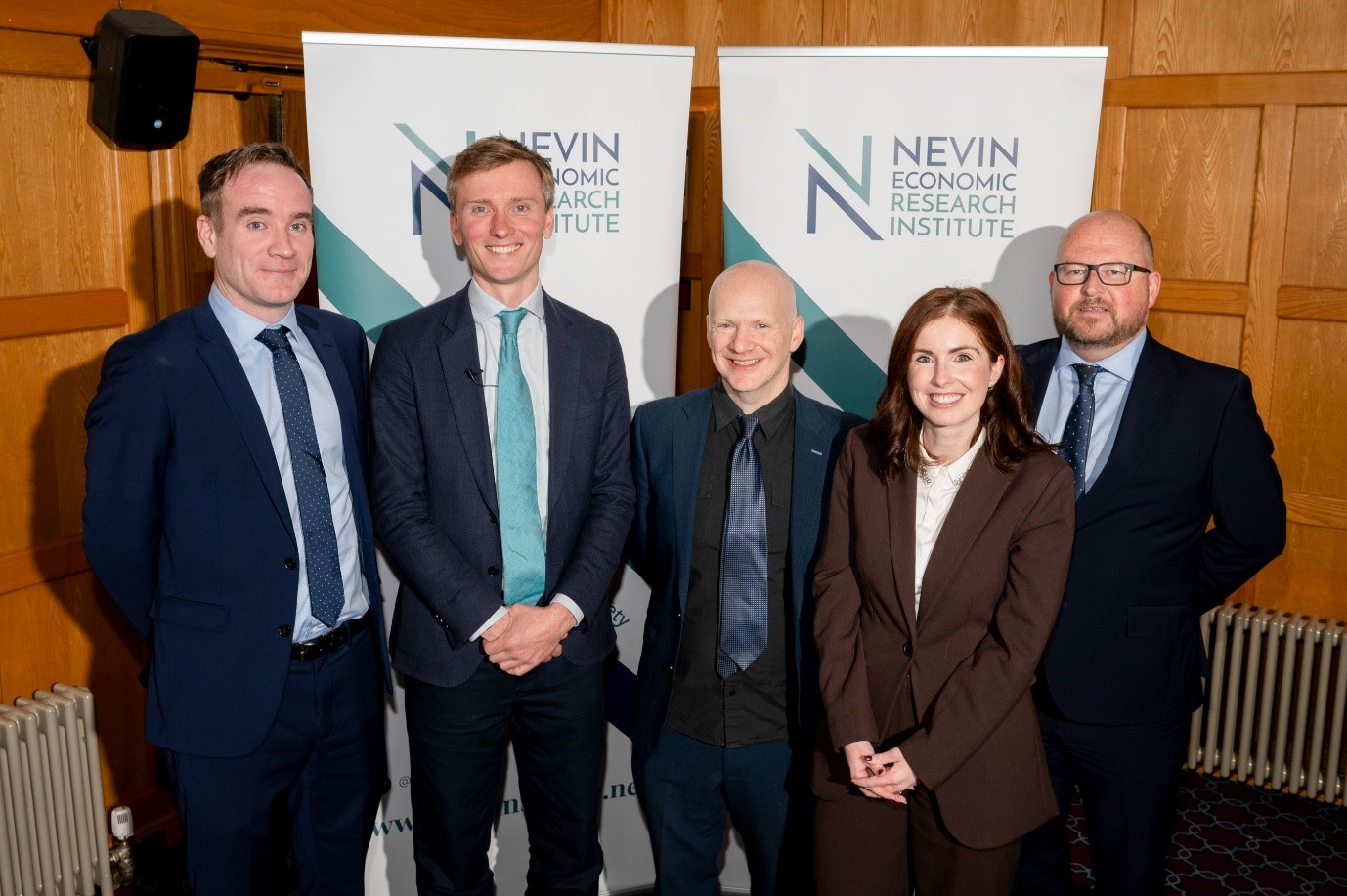
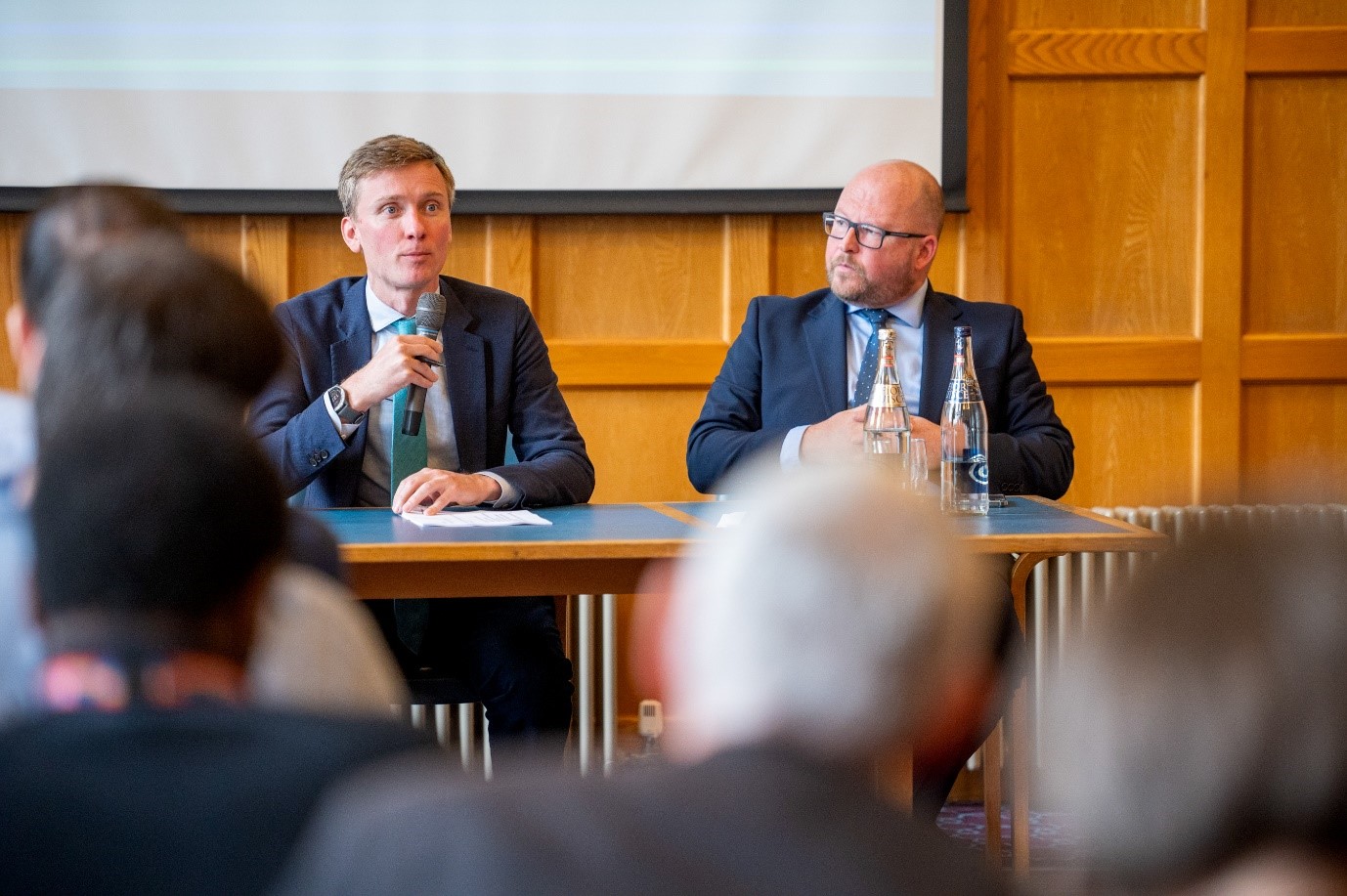
This year marked our 11th Annual Dónal Nevin lecture and we were delighted to have Torsten Bell from The Resolution Foundation present the topic of ‘Good Work across our nations, regions and industries’. We were also delighted to have ICTU General Secretary Owen Reidy deliver a response to the lecture and thank Clodagh Rice from BBC for chairing the event.

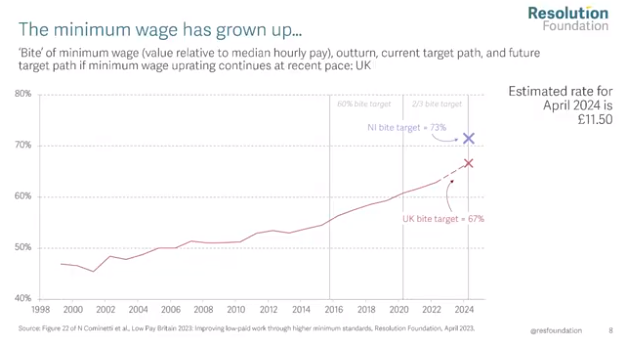
Torsten began his lecture by reminding everyone that over the long run there have been improvements in the labour market and that policy can have a big impact. These included trends in the unemployment rate, rates of accident or mortality at work, and the introduction of the minimum wage and increases in it over the last 20 years.
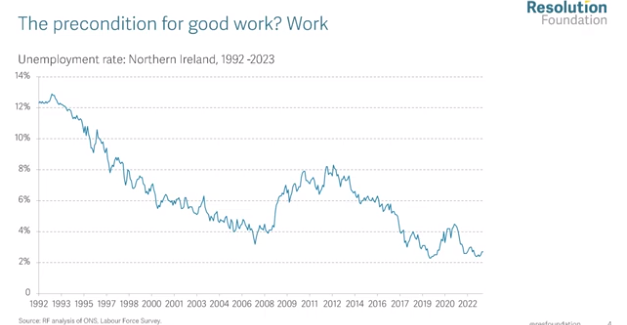
On the low rate of unemployment he showed the rate in Northern Ireland from 1992 to 2023 and reminded everyone that a precondition for good work is work itself. The low rate of unemployment does stand out as a key distinguisher between the UK economy and other European countries.
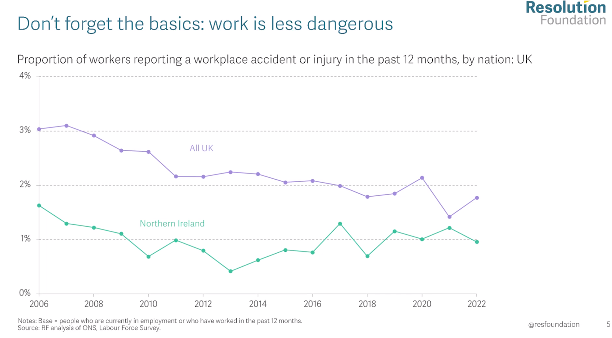
On rates of workplace accidents or injury there has been a clear long-term decline. Over the last 12 months the data show an almost 50% decline across the UK since 2006. However, the decline in Northern Ireland is less clear, and there appears to be an uptick in accident and injuries since 2013.
The UK is up there with amongst the highest rates of minimum wage and low pay (defined as those earning below 66% of the typical wage) is now the lowest on record. Furthermore, he outlined the regional positive impacts of a national minimum wage, in delivering a pay floor across the regions.
From here Torsten turned to the what he referred to as the more ‘gloomy’ - conditions within the labour market which have either not improved or have got significantly worse.
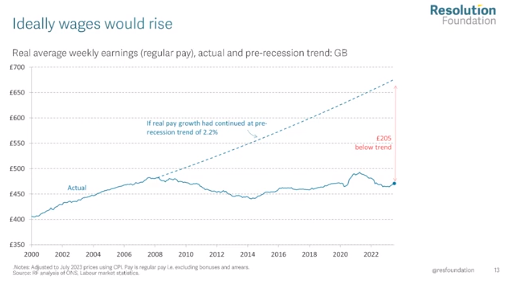
Wage stagnation was the first big area Torsten touched on. For most of the last century there was an assumption that wages would always be rising, that each generation would be better off than the last. However, if you stop your economy growing, like the UK has done, you’re not going to be able to achieve this. Since 2008 the average worker’s wages are losing out to the tune of about £10,000 lower per year.
Next Torsten turned to hours worked. Labour market policy needs to focus more on the hours that people are working, not just what they are earning per hour. We need to care about weekly pay, because that’s what living standards are actually about.
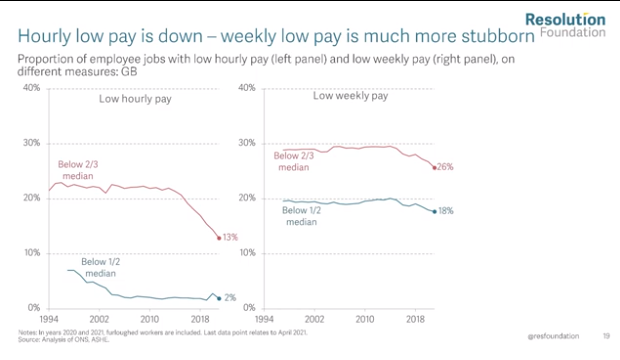
Torsten drew upon evidence showing that lower paid workers are both more likely to be over- and under-employed – both things which policy can seek to address.
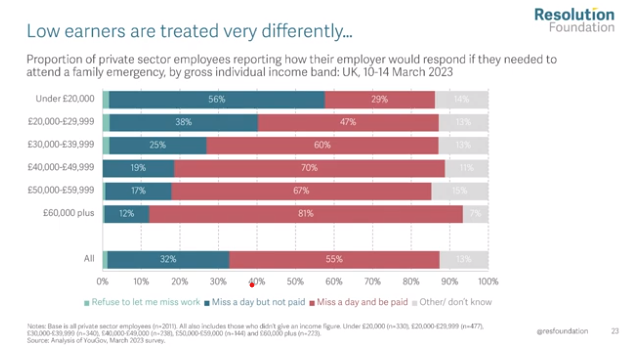
The quality of the jobs available impacts the likelihood of those who are underemployed working more hours. Torsten showed that different groups of workers face extraordinarily different working conditions. He drew on evidence on workers’ flexibility or autonomy over their work, other pecuniary benefits such as sick pay and insecure work and illustrated that in each case those who are low paid are more likely to have poorer conditions across all of these other aspects of job quality.
Having identified the areas where the UK has labour market problems – Torsten turned to address the topic of how to improve the quality of jobs of those in poor quality jobs.
To achieve this the UK needs stronger labour market institutions. Decent work is a pre-requisite for delivering shared prosperity. Torsten described how the national framework of employment regulation and enforcement needs to be strengthened to better protect workers. He recommended making three policy changes:
- First, to ensure that workers fully understand their options, unions should have a right to enter workplaces to raise awareness among employees;
- Second, we should adjust union-recognition requirements to bring them more into line with other aspects of democratic life;
- Third, we should make voting processes more inclusive by introducing an online option for union recognition ballots.
However, some of the challenges we face are specific to particular areas of the labour market and so are less amenable to one-size-fits-all employment regulations acting in isolation. We need to craft new institutions with the remit and agility to target the most acute problems that appear in our diverse labour market.
Torsten proposed ‘Good Work Agreements’ (GWAs) in problem sectors: a framework to bring together workers and employers to collaboratively solve problems and address poor-quality work in specific pockets of the economy, complementing existing national regulation and industrial relations.
You can watch the lecture in full here: https://www.nerinstitute.net/videos-podcasts