UCD and NERI publish the Only Study of its Kind on Essential Workers’ Job Quality and Well-being during the COVID-19 Pandemic. The authors of the NERI Report Series No. 24 are Dr. Maria Belizón (UCD), Professor John Geary (UCD) and Mr. Paul Mac Flynn, NERI Co-director.
New research, published today by University College Dublin in partnership with the Nevin Economic Research Institute, has found that female essential workers’ health and well-being was substantially more impaired than that of male workers while working during the COVID-19 pandemic.
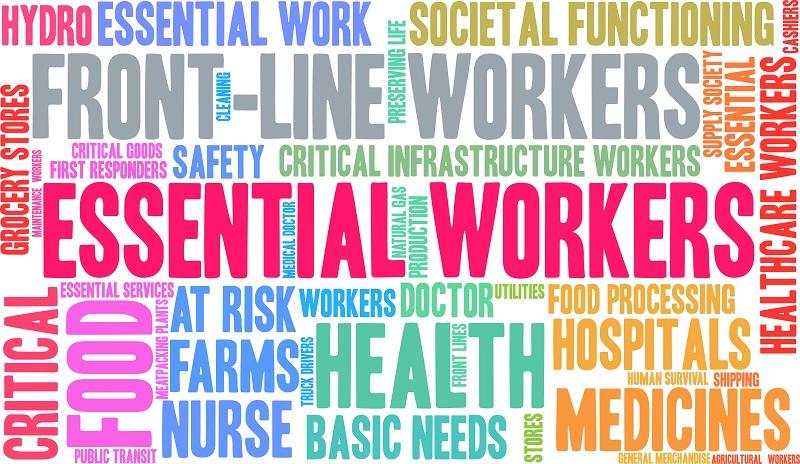
A fundamental element of the response to the unprecedented COVID-19 pandemic emergency involved the provision of critical services. While a little over a half of the Irish workforce was required to remain at home and work from home, the remaining workforce was expected to leave the relative safety of their homes to go to the site of their work in order to keep our health services and economy functioning. We came to refer to this latter group of workers as “essential workers” or “frontline workers”, terms which we had little or no concept of prior to the COVID-19 pandemic.
In Ireland, essential workers were specifically defined by those critical activities the government deemed essential during the COVID-19 pandemic. Confronted with a then potentially life-threatening virus, many placed themselves at enormous personal risk of contracting Coronavirus in the workplace on an oftentimes daily basis. This risk was particularly acute for health sector workers who cared for patients in hospitals, clinics and nursing homes. Among them, nurses and doctors were expected to treat patients who had contracted the virus with the very real possibility that they themselves might become infected and in turn come to act as a vector for the further transmission of the disease in their families and communities. These were no idle or exaggerated fears, and health care staff had no firm assurances that the personal protective equipment (PPE) that they were supplied with – certainly in the early months of the pandemic – would be effective in protecting them. Some of course were deprived of these basic protections as the government scrambled to access PPE from international suppliers. Other essential workers were required to continue working in factories and in retail outlets to prepare and to supply food for customers without knowing again if the safety provisions afforded them were sufficient to ensure they would not fall foul of the virus. Members of An Garda Síochána (the police force) were expected to enforce government lockdown regulations and ensure that the population at large would abide by the new regimen.
While these were enormously difficult and stressful times for us all, they were particularly so for our “essential workers”. Although widely and rightly acclaimed for their bravery, dedication and hard work, there has been no comprehensive study to date of essential workers’ work experiences, job quality and well-being during the pandemic in Ireland.
We provide the first and only such study. Our study, the UCD Working in Ireland Survey 2021, is a major national representative survey on job quality in Ireland during the pandemic. We provide a unique insight into the experiences of essential workers, as reported by them.
In this report we focus, in particular, on answering the following questions:
• Which workers were deemed ‘essential workers’ in Ireland?
• To what extent were essential workers at risk of contracting COVID-19 in the workplace?
• How did their risk exposure to Coronavirus affect their levels of anxiety
• To what extent, if any, did working on the frontlines of an emergency crisis affect essential workers’ conduct of work? If it did, in what ways was this evident?
• Were there any mitigating factors that helped reduce the risk of contracting COVID-19 and alleviate essential workers’ anxiety?
• And finally, we enquire of the lessons that might be drawn from our findings of essential workers’ experiences of working during a pandemic for the future management of our essential services
Our main findings include the following:
1. At least six in ten essential workers in Ireland were subject to a moderate or a high level of risk of contracting COVID-19 in the workplace. Among them, female workers were at a greater risk of contracting the virus than were male workers.
2. Workers in human health, public administration and defence were particularly high-risk prone.
3. Essential workers’ well-being was substantially impaired during the COVID-19 pandemic. This was manifested in pronounced levels of reported anxiety. Again, this was particularly so for female essential workers.
4. Almost seven in ten essential workers voiced their worries about contracting the virus to management. However, only half of these essential workers reported that their organisations fully addressed their concerns.
5. COVID-19 mitigation strategies were much better implemented for high earner essential workers than they were for essential workers on lower wages.
6. Mitigation strategies were reported to be well-implemented in the agriculture and construction sectors, but less so in public administration and defence.
7. Essential workers’ perceptions of trade union influence during the pandemic are generally positive. There is a modest but significant correlation between a union presence in the workplace and low levels of perceived risk of workers contracting Coronavirus.
8. A favourable industrial relations environment in the workplace where essential workers expressed trust in their management and believed they were treated fairly is associated with a greater likelihood of staff voicing their concerns of COVID-19 and they being effectively addressed by their employer.
9. Training and development provision helped to sustain essential workers’ well-being and health, particularly in respect of their anxiety levels
10. Extensive work effort, measured by whether or not essential workers were working over 40hours/week, was high for those employed in public administration and defence.
11. Intensive or high work effort levels were particularly more pronounced among female essential workers and those working in the human health and manufacturing sectors.
12. There was also a significant correlation between essential workers’ levels of intensive work effort and their levels of anxiety; the harder they worked, the higher the level of anxiety they experienced.
13. Essential workers employed in workplaces where they trusted their management and believed they were treated with fairness and respect, and where there was trade union representation, were more likely to report lower levels of work intensification and anxiety.
14. Finally in the conclusion to the report, we reflect on the importance of our main findings and their implications for policy and practice are drawn.