
  • X
  • Facebook
  • YouTube

Top header menu

  • Sign up to our mailing list
Home
  • Themes
      1. A New Economic Model
      2. Wages and Incomes
      3. Employment and Job Quality
      4. Climate and the Just Transition
      5. Taxes and the Welfare State
      6. Understanding the Labour Market
  • Our Work
      1. Research
      2. Blog
      3. The NERI videos series
      4. Learning about our economy
      5. Media
      6. Visualising our economy
  • Dashboards
      1. Broad sectors
      2. Subsectors
  • Events
      1. External event contributions
  • About
      1. Our team
      2. Our supporters
      3. Charities Governance Code
  • Contact

Topics

  • A New Economic Model
  • Wages and Incomes
  • Employment and Job Quality
  • Climate and the Just Transition
  • Taxes and the Welfare State
  • Understanding our Labour Market

We must not go back to business as usual

Economic-recovery
Blog
 March 
23,
 2021
Profile picture for user Dr Tom McDonnell
  By Dr Tom McDonnell

NERI Co-directors, Dr Tom McDonnell & Paul Mac Flynn wrote this op ed last week.  It is about not going back to business as usual in Ireland after the Covid-19 pandemic ends.

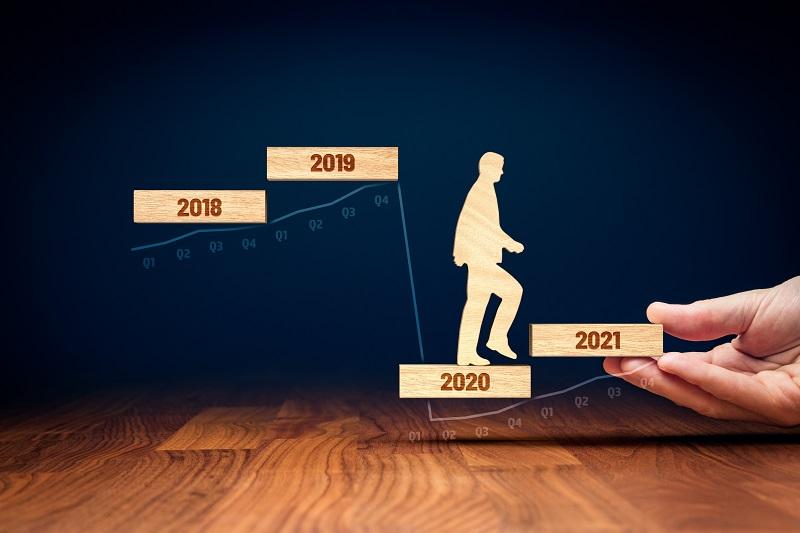
The vaccination campaign will be the decisive factor for economic recovery, albeit a recovery that is going to vary in its strength and timing across sectors and regions. In the first phase of this pandemic, countries that managed to contain and control the virus have reaped the economic rewards, however as we move to this next phase it is quite clear that countries which mount aggressive and efficient vaccination programmes will see the first real glimpses of recovery. Nevertheless, the extent and nature of the recovery will depend on the policies pursued over the next few weeks, months and years. 

In the short-term we will need a targeted policy response to ensure the end of lockdown doesn't trigger a crisis moment for business arising from a confluence of debt crystallisation and withdrawn supports. The solvency of the corporate sector risks becoming a significant threat to recovery if not managed carefully. 

In the slightly longer-term we will need more general policies for boosting employment and productivity. Despite the significant support provided to the labour market during the crisis, unemployment will not return to pre pandemic levels overnight. We will still need to support the incomes of those whose livelihoods have been uprooted by this crisis. Support for our economy should include a significant programme of public investment in areas like public housing and building retrofits, as well as much greater funding for human capital development. It is also quite clear now that we cannot continue operating the precarious model of healthcare that exists at present in this country. Furthermore, Ireland's relative under-spends on education, on public childcare and on public R&D compared to almost every other high-income European country has long been a significant and obvious failure of Irish policymaking and a failure that constrains our long-run growth and employment potential. 

We must avoid the obvious mistakes. Debt sustainability will not be a problem in the short run. Borrowing costs are close to zero, and it's crucial that we don't move too quickly to reduce the deficit as this will hinder any nascent recovery. In any case, the deficit will return to a sustainable path if we can restore employment and incomes. Fiscal and monetary policy will need to remain expansionary for the next few years. 

The crisis has shone the spotlight on other areas where reform is needed. The inadequacy of our social insurance system became clear early on and it is time for a root and branch review of the social insurance system and in particular its chronic under-funding relative to European peer countries.

A common misconception is that the economic cycle is like a pendulum of recession and recovery swinging back and forth. This is a mistake. The economy will not miraculously right itself and the recovery will be weaker and slower in the absence of appropriate state intervention. 

Of course, the economy of the 2020s will be different from the pre-pandemic economy. Crucially, our focus should not solely be on quick employment 'wins' per se, but on ensuring we are best placed to benefit over the longer-term from the structural shifts ongoing in the economy. We will need significant and ongoing investments in our people if we are to fully benefit from the global shifts towards digitalisation and automation and the transition to a zero-carbon future. We will also need to ensure easily accessible upskilling and reskilling opportunities in order that vulnerable workers and the long-term unemployed are properly able to benefit from these green and digital revolutions.
The last twelve months have seen radical policy interventions. The next twelve months will need more. We cannot go back to business as usual.

Profile picture for user Dr Tom McDonnell

Dr Tom McDonnell

Tom McDonnell is co-director of the Nevin Economic Research Institute and is based in the Dublin office. In addition to managing staff in the Dublin office he has co-responsibility for the NERI's research programme and for its strategic direction.  

He is also responsible for, among other things, the NERI's analysis of the Republic of Ireland economy including risks, trends and forecasts. He specialises in economic growth, economics of innovation, Irish and European economies, and fiscal policy. 

He previously worked as an economist at TASC and before that was a lecturer in economics at NUI Galway and at DCU. He has also taught at Maynooth University (MU) and is currently an occasional staff member at MU. 

Tom obtained his PhD in economics from NUI Galway. He is a native of Limerick city and lives in Maynooth.

Contact: [email protected] or 00353 1 889 77 42.

Upcoming events

Wed, Sep 16 2026, 3:30 - 4:30pm
The Irish labour market: Recent developments and future growth
Online Zoom event
Thu, Oct 8 2026, 3:30 - 4:30pm
The Budget 2027: NERI Post Budget Analysis
Online Zoom event
Wed, Nov 11 2026, 3:30 - 4:30pm
European Attitudes to Basic Income: exploring women's perspectives
Online Zoom event

Latest

It’s wrong to assume that job quality is the enemy of job creation
job quality
A number of business organisations recently wrote to the Economy Minister...
New Labour Market Entrants, earnings, housing costs and living standards in 2024
Man and savings
This Research InBrief by NERI economist, Ciarán Nugent examines trends in...
Progress in Pay, But Not in Participation or Progression
money
Some of the results move in the right direction, but overall the picture is one...

Breadcrumb

  1. Home
  2. Blog
  3. We must not go back to business as usual

Subscribe to our Mailing list

  • X
  • Facebook
  • YouTube
Logo

The Nevin Economic Research Institute is a Registered Charity since the 1 August 2013 with the Charity Number - 20082130.

Privacy and Cookies

We use necessary cookies to make our site work. We also use analytics cookies without user tracking to help us improve our site.

Cookie Policy | Privacy Statement

Website design and development by Infobo.

Contact us

  •  Address: 31/32 Parnell Square, Dublin 1, Ireland
  •  Telephone: +353 1 8897722
  •  Email: [email protected]
  •  Address: 45-47 Donegall Street, Belfast BT1 2FG
  •  Telephone: +44 28 902 46214
  •  Email: [email protected]
Copyright © 2025 Nevin Economic Research Institute. All rights reserved.

Footer

  • Contact
  • Privacy
  • Cookie policy
  • Themes
    • A New Economic Model
    • Wages and Incomes
    • Employment and Job Quality
    • Climate and the Just Transition
    • Taxes and the Welfare State
    • Understanding the Labour Market
  • Our Work
    • Research
    • Blog
    • The NERI videos series
    • Learning about our economy
    • Media
    • Visualising our economy
  • Dashboards
    • Broad sectors
    • Subsectors
  • Events
    • External event contributions
  • About
    • Our team
    • Our supporters
    • Charities Governance Code
  • Contact
Clear keys input element