  • X
  • Facebook
  • YouTube

Top header menu

  • Sign up to our mailing list
Home
  • Themes
      1. A New Economic Model
      2. Wages and Incomes
      3. Employment and Job Quality
      4. Climate and the Just Transition
      5. Taxes and the Welfare State
      6. Understanding the Labour Market
  • Our Work
      1. Research
      2. Blog
      3. The NERI videos series
      4. Learning about our economy
      5. Media
      6. Visualising our economy
  • Dashboards
      1. Broad sectors
      2. Subsectors
  • Events
      1. External event contributions
  • About
      1. Our team
      2. Our supporters
      3. Charities Governance Code
  • Contact

Topics

  • A New Economic Model
  • Wages and Incomes
  • Employment and Job Quality
  • Climate and the Just Transition
  • Taxes and the Welfare State
  • Understanding our Labour Market

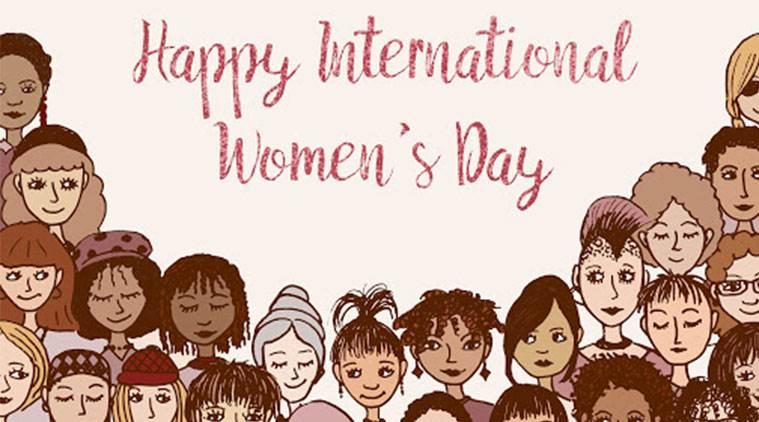
Towards ‘better jobs’ for all: Why we need to listen to the women's movement

photo
Blog
 March 
8,
 2018
Profile picture for user Dr Lisa Wilson
  By Dr Lisa Wilson

Recently we have seen increased attention being given to the nature of employment and in particular to the quality of employment. There is hardly a day that passes that when we pick up the newspaper or turn on the radio that we do not hear talk of ‘precarious work’, ‘insecure jobs’, ‘zero hours contracts’, ‘the gig economy’, ‘contingent employment’ or some variation of these terms.

Whilst there is much debate about the extent of these forms of employment, change over time, or the factors driving these there is more of a consensus on the human impact of these jobs.  Workers in these forms of employment are more likely to have less security, have lower earnings, polarised working hours, less opportunities for training, face more occupational and health risks.

These work practices also impact negatively on workers in terms of lower living standards, difficulties in accessing secure accommodation and placing them at greater risk of developing health problems. All in all, there is broad agreement that these lousy jobs have lousy consequences. 

A quick glance at the gender of the average precarious worker tends to show that most of them are male. There is also an assumption that they work for Uber, Deliveroo or one of the other platform-based apps.

In a recently published paper I systematically examined the gendered nature of employment, and insecure, low paid employment over a 20-year period. The results revealed a story of both continuity and change. In terms of change we have seen an overall convergence or ‘harmonising down’ of employment security and quality for men. It is from here that the perception that the precarious worker is a man or that the gig economy ‘is a man’s world’ comes from. Men’s employment has experienced the largest relative rate of change, becoming more insecure or poor in quality. 

The results however also show evidence of enduring gender inequalities in the labour market. The fact is that women continue to be more likely to be in insecure employment. In addition, significant gendered segregation remains in terms of the types of jobs that both men and women do, with women continuing to dominate in what is often known as ‘pink collar’ jobs, such as caring jobs and retail jobs.

Moreover, when the income of men and women across occupations was examined it was seen that women continue to dominate in the low paid occupations. What is more, even in these lower paid occupations, a substantive gender pay gap remains. A double pay penalty.

Taking all of this together then we see that the average precarious worker is not male. What’s happening is that men’s work is starting to look like what women’s work has long been. Insecure, low paid, poor quality. But women continue to dominate this space.

To stop the spread of lousy jobs we need to move beyond a sole focus on these new forms of precarious employment as these only make up a minority share of the total. When we do, we will see that many of the policy solutions to tackling precarious employment are the same as those which have long been proposed by the women’s movement, which needs to continue forth in its efforts to have these heard. 

Profile picture for user Dr Lisa Wilson

Dr Lisa Wilson

Lisa Wilson is a Senior Economist at the Nevin Economic Research Institute (NERI), where she carried out a broad range of work in areas related to labour market, income distribution, poverty, public expenditure, living standards, and well-being. Lisa is an Adjunct Associate Professor in University College Dublin's School of Business. 

Lisa's dedication to advancing the well-being of individuals and communities extends beyond her research role. She serves as an independent expert to the Minister for Economy in Northern Ireland, offering strategic guidance on initiatives related to 'good jobs'. In addition to her role at the NERI, Lisa is a former member of the Independent Fiscal Commission in Northern Ireland.

Lisa graduated with a Bsc Hons from Ulster University in 2007 and later pursued her postgraduate studies at Queen's University, Belfast. She holds a Ph.D. from Queen's University, focusing her research on income inequality and well-being.

Lisa is a proud Donegal native, and is deeply committed to the economic development and social progress of Northern Ireland and the North West.

Contact: [email protected].

Upcoming events

Wed, Sep 16 2026, 3:30 - 4:30pm
The Irish labour market: Recent developments and future growth
Online Zoom event
Thu, Oct 8 2026, 3:30 - 4:30pm
The Budget 2027: NERI Post Budget Analysis
Online Zoom event
Wed, Nov 11 2026, 3:30 - 4:30pm
European Attitudes to Basic Income: exploring women's perspectives
Online Zoom event

Latest

It’s wrong to assume that job quality is the enemy of job creation
job quality
A number of business organisations recently wrote to the Economy Minister...
New Labour Market Entrants, earnings, housing costs and living standards in 2024
Man and savings
This Research InBrief by NERI economist, Ciarán Nugent examines trends in...
Progress in Pay, But Not in Participation or Progression
money
Some of the results move in the right direction, but overall the picture is one...

Breadcrumb

  1. Home
  2. Blog
  3. Towards ‘better jobs’ for all: Why we need to listen to the women's movement

Subscribe to our Mailing list

  • X
  • Facebook
  • YouTube
Logo

The Nevin Economic Research Institute is a Registered Charity since the 1 August 2013 with the Charity Number - 20082130.

Privacy and Cookies

We use necessary cookies to make our site work. We also use analytics cookies without user tracking to help us improve our site.

Cookie Policy | Privacy Statement

Website design and development by Infobo.

Contact us

  •  Address: 31/32 Parnell Square, Dublin 1, Ireland
  •  Telephone: +353 1 8897722
  •  Email: [email protected]
  •  Address: 45-47 Donegall Street, Belfast BT1 2FG
  •  Telephone: +44 28 902 46214
  •  Email: [email protected]
Copyright © 2025 Nevin Economic Research Institute. All rights reserved.

Footer

  • Contact
  • Privacy
  • Cookie policy
  • Themes
    • A New Economic Model
    • Wages and Incomes
    • Employment and Job Quality
    • Climate and the Just Transition
    • Taxes and the Welfare State
    • Understanding the Labour Market
  • Our Work
    • Research
    • Blog
    • The NERI videos series
    • Learning about our economy
    • Media
    • Visualising our economy
  • Dashboards
    • Broad sectors
    • Subsectors
  • Events
    • External event contributions
  • About
    • Our team
    • Our supporters
    • Charities Governance Code
  • Contact
Clear keys input element