
  • X
  • Facebook
  • YouTube

Top header menu

  • Sign up to our mailing list
Home
  • Themes
      1. A New Economic Model
      2. Wages and Incomes
      3. Employment and Job Quality
      4. Climate and the Just Transition
      5. Taxes and the Welfare State
      6. Understanding the Labour Market
  • Our Work
      1. Research
      2. Blog
      3. The NERI videos series
      4. Learning about our economy
      5. Media
      6. Visualising our economy
  • Dashboards
      1. Broad sectors
      2. Subsectors
  • Events
      1. External event contributions
  • About
      1. Our team
      2. Our supporters
      3. Charities Governance Code
  • Contact

Topics

  • A New Economic Model
  • Wages and Incomes
  • Employment and Job Quality
  • Climate and the Just Transition
  • Taxes and the Welfare State
  • Understanding our Labour Market

Security for a disruptive world

Unemployment Insurance
Blog
 March 
28,
 2024
Profile picture for user Paul Mac Flynn
  By Paul Mac Flynn

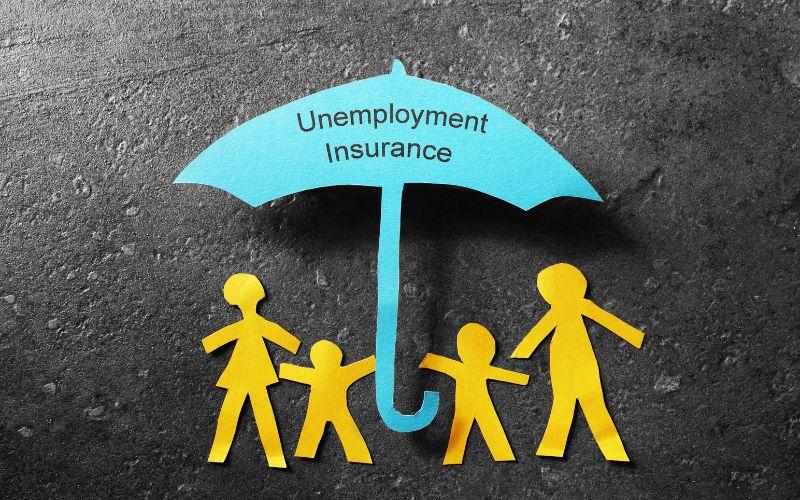
In this blog, NERI Co-director, Paul Mac Flynn looks at his new NERI InBrief which sets out how the Northern Ireland and the Republic of Ireland match up compared to our European peers regarding Unemployment Insurance.


As the last number of years have shown, we live in very disruptive times. Beyond the many crises that we have encountered of late, it seems that not a day goes by without some dire warning of threats in the near future. Whether it is Artificial Intelligence, trade wars or the climate crisis, the future seems almost as terrifying as the past.

What should reassure us is that many of these doom-laden prophecies are nothing new and that many of the bleak futures they paint never come to pass. In the past, globalisation and the internet were seen as the most pressing threats, yet here we are still.

In many cases these prophecies centre around massive job losses as significant changes sweep the economy. However, the experience of the last few decades shows us that while these changes can be quite disruptive, the impact is always subtler than the headlines would suggest.

Globalisation didn’t destroy employment, it destroyed jobs. That is an important distinction and particularly so when you are trying to formulate a policy response. It would be more accurate to say that globalisation changed employment. It moved many western economies away from manufacturing to services. Whether or not this was a wise move is open for debate, but what we should be concerned about is how that change happened.

Since the great shift to services took place there has also been a massive shift in another area, welfare policy. Partly as a response to lingering long term employment that followed the decline of manufacturing, many western governments began to significantly curtail the support made available to people who became unemployed.

Previously, schemes in many western European economies sought to protect people’s incomes by paying them a percentage of their previous earnings. While losing a job was obviously still a major disruption, it wasn’t necessarily ruinous. That has changed.

Many countries have reduced the generosity of schemes significantly and in countries like Ireland and the UK, we never had them to begin with. In both the Republic of Ireland and Northern Ireland, unemployment benefits are paid at a flat rate to everyone. For many people this means that losing their job could dramatically alter their standard of living.

This would be a merely unfortunate event if job losses were not that common an occurrence, but as we have seen that may not be the case. Whether or not the prophecies of AI come to pass, we know that we are definitely facing into significant disruption with climate change, one way or the other.

If we are to meet the ambitious climate goals set out by many western governments, then we will have to confront the reality of what it will mean for jobs across a whole swathe of sectors (for more on this, see there two NERI reports released last week).

If we are going to consciously bring about such an enormous level of disruption to our labour market, then surely, we must build back or create a system of unemployment protection that is suited to the challenge.

This new NERI InBrief sets out how the Northern Ireland and the Republic of Ireland match up compared to our European peers and the reality is that both are at the bottom of the table. We should, at the very least, aim to be in the upper end of the table and moving to an earnings-linked system is the only way to do that. Moreover, we need to stop seeing unemployment insurance as some sort of fiscal burden, and see it as a key pillar of economic security in a very disruptive world.   

Profile picture for user Paul Mac Flynn

Paul Mac Flynn

Paul Mac Flynn is co-director of the Nevin Economic Research Institute and is based in the Belfast office. In addition to managing the Belfast office he has co-responsibility for the NERI's research programme and for its strategic direction.  

He leads on the NERI’s analysis of the Northern Ireland economy along with all research into the impact of the United Kingdom‘s departure from the European Union. Other research areas include regional productivity, the all-island economy and the future of work.

He is a graduate of University College Dublin with a BA in Economics and Politics and the University of Bristol with an MSc in Economics and Public Policy, specialising in the economic impacts of political devolution in the UK.

Contact: [email protected] or 00 44 28 9024 6214.

Upcoming events

Wed, Sep 16 2026, 3:30 - 4:30pm
The Irish labour market: Recent developments and future growth
Online Zoom event
Thu, Oct 8 2026, 3:30 - 4:30pm
The Budget 2027: NERI Post Budget Analysis
Online Zoom event
Wed, Nov 11 2026, 3:30 - 4:30pm
European Attitudes to Basic Income: exploring women's perspectives
Online Zoom event

Latest

It’s wrong to assume that job quality is the enemy of job creation
job quality
A number of business organisations recently wrote to the Economy Minister...
New Labour Market Entrants, earnings, housing costs and living standards in 2024
Man and savings
This Research InBrief by NERI economist, Ciarán Nugent examines trends in...
Progress in Pay, But Not in Participation or Progression
money
Some of the results move in the right direction, but overall the picture is one...

Breadcrumb

  1. Home
  2. Blog
  3. Security for a disruptive world

Subscribe to our Mailing list

  • X
  • Facebook
  • YouTube
Logo

The Nevin Economic Research Institute is a Registered Charity since the 1 August 2013 with the Charity Number - 20082130.

Privacy and Cookies

We use necessary cookies to make our site work. We also use analytics cookies without user tracking to help us improve our site.

Cookie Policy | Privacy Statement

Website design and development by Infobo.

Contact us

  •  Address: 31/32 Parnell Square, Dublin 1, Ireland
  •  Telephone: +353 1 8897722
  •  Email: [email protected]
  •  Address: 45-47 Donegall Street, Belfast BT1 2FG
  •  Telephone: +44 28 902 46214
  •  Email: [email protected]
Copyright © 2025 Nevin Economic Research Institute. All rights reserved.

Footer

  • Contact
  • Privacy
  • Cookie policy
  • Themes
    • A New Economic Model
    • Wages and Incomes
    • Employment and Job Quality
    • Climate and the Just Transition
    • Taxes and the Welfare State
    • Understanding the Labour Market
  • Our Work
    • Research
    • Blog
    • The NERI videos series
    • Learning about our economy
    • Media
    • Visualising our economy
  • Dashboards
    • Broad sectors
    • Subsectors
  • Events
    • External event contributions
  • About
    • Our team
    • Our supporters
    • Charities Governance Code
  • Contact
Clear keys input element