
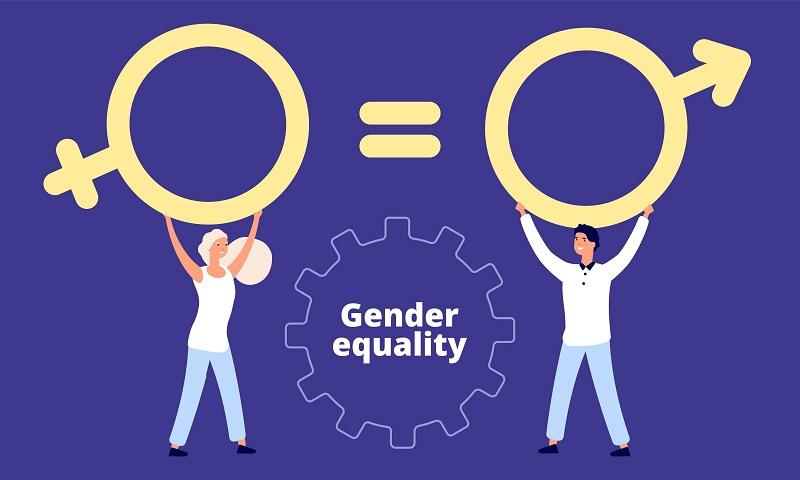

Submission by NERI Co-director, Paul Mac Flynn regarding the report of the Citizens' Assembly on Gender Equality.
The NERI welcomes the report of the Citizen’s Assembly on Gender Equality and the recommendations that it has issued. Several of the recommendations encompass policy areas where the NERI has carried out research. This submission will highlight where our work can help inform the committee’s deliberations on these matters. There are five main areas that we will discuss in this submission;
- Care and Childcare
- Social Protection
- The Gender Pay Gap
- Collective Bargaining
- Flexible Working
Naturally, many of the policy proposals deal with more than one of the issues outlined above, but we have attempted to link them as much as possible to the recommendations of the Citizens Assembly.
Childcare – Recommendation 8
Around 40% of workers in the Republic of Ireland have dependent children. In the Republic of Ireland 62.5% of workers with dependent children under the age of 15 live in households where all adults in the household work (couple with dependent children households). Given this it is argued that without Government intervention a lack of access to childcare will affect the ability of workers with dependent children to participate in the labour market. Research to date has shown that parental childcare is still highly gendered in nature and that this disparity has grown over the pension of the pandemic. In the Republic of Ireland, 30% of those with dependent children aged under 12 rely on non-parental childcare. This figure is likely to be higher for working parents with dependent children. There are also widespread regional disparities in cost and provision of childcare with urban areas facing significantly higher costs. The lack of affordable childcare not only poses an indefensible barrier to the full participation of all citizens in our labour market, it represents an unnecessary and damaging limitation on the potential of our economy.
Research in Northern Ireland shows that various methods of subsidisation of childcare do not represent value for money. In particular, higher Child Tax Credit spending in Northern Ireland has only led to higher cost of provision and done little to achieve greater access. Therefore, we believe that full public provision is the only way of achieving equity and efficiency in resolving this long-standing policy issue.
We view public provision of childcare as one part of a suite of universal basic services that the state should provide to its citizens. We can think of universal basic services as synonymous with the provision of free or extremely low-cost public services available to all and funded by taxation. Expanding the provision of universal basic services is one of the most structurally important policy shifts that any government could take from an economic inequality and cost-of-living perspective. Such a policy programme would amount to a de-commodification of the affected range of services. As such, it would diminish the importance of market-based income and the economic disadvantage currently experienced by women in terms of having lower average market income.
Adherents for universalism can point to the success of the Scandinavian or ‘Nordic model’ in achieving excellent welfare outcomes. As well as the strongest employment rates in the world, the Nordics have achieved low child poverty, low poverty amongst women, high rates of female labour force participation, and low levels of inequality. The Nordic model is based on strong egalitarianism, a monopoly role for the public sector as service providers, along with generous income transfers. Despite high taxes, the universalist welfare states tend to rank amongst the most competitive in the world with very high levels of labour productivity and per capita output. These countries also tend to perform very well across many well-being indicators.
Social Protection – Recommendation 14
The NERI agrees with the recommendation that social protection payments should support an adequate standard of living above the poverty line. While we note the mention of Universal Basic Income, we would propose that a Minimum Income Guarantee (MIG) would have a much greater effect on living standards. A MIG is a policy which maintains that individuals, and the households in which they live, should have a minimum amount of income to live on so as to ensure that they have the ability to enjoy a basic, but decent standard of living. Specifically, a MIG would provide a social security cash payment to those who are unable to work or whose specific circumstance or needs mean that they cannot reach a minimum standard of living through earnings from work alone. In the Republic of Ireland, the Vincentian Partnership for Social Justice has undertaken calculations of the minimum income standard since 2006 for a broad range of household types and compositions. The minimum income standard is calculated by identifying the goods and services required by different household types in order to meet their minimum needs.
In the Republic of Ireland, the minimum income standard required for a single working-age adult household is €502.52. The amount for couple households with two children rises to somewhere between €766 and €1232 depending on location reflecting the obvious requirement for more resources for a household of this size. A lone parent household with two children has a minimum income guarantee requirement of somewhere between €398 and €1231 (depending on location) in the Republic of Ireland.
Currently, full-time work (39 hours) at the national minimum wage provides earnings which equate to approximately 79% of the minimum income standard for a single adult household. For a single person who is unemployed the state currently provides circa 42% of that required to meet the minimum required for a decent standard of living. When full entitlement to rent supplement is also claimed state supports provide 62% of that required.
Whilst the Covid-19 pandemic foregrounded the fundamental importance of unpaid work for society and the economy, there has been little action to match this in policy terms. We must consider how society might give value to and adequately reward unpaid care work.
The Gender Pay Gap – Recommendation 32
The NERI very much welcomes the Citizens Assembly’s commitment to eliminate the gender pay gap, but we feel this policy needs to be more informed. There are significant issues surrounding how the pay gap is currently calculated and how it is measures. Specifically, we do not have any consistency in terms of how or where we report our national gender pay gap data. This is because we do not have official statistics on the gender pay gap at national level, and so there is no consistency either in how we measure it, the frequency with which we measure it, or the source of data which we use to measure it. Targets can be said to focus minds and give an explicit goal under which political and policy action can work towards to eradicate the gender pay gap. However, there is a real risk that when it comes to the gender pay gap that if we narrow our focus, we can end up missing the target. This is because the gender pay gap is a complex issue and cannot be accurately captured via a single indicator such as the gap in mean hourly earnings. The Gender Pay Gap Information Bill recognises this, and so this is why employers will be required to report on the gap using a range of indicators.
To illustrate this, we need only look across the border to Northern Ireland to understand the failings of relying on a single headline indicator to capture the gender pay gap. In their case, they utilise the gender pay gap in the median earnings of full-time workers only. Using this measure the data has shown consistently over the last number of years that females earn more than males, and so in this sense there is a reverse gender pay gap. As a result, there has been a lack of political will to do anything about the gender pay gap. The reality, however, is that whilst that may be true using that single indicator, when we look at the extent of the gender pay gap using a range of indicators we see overwhelmingly that females earn less than males. They earn less when we use mean earnings rather than median earnings. They earn less when we look across all males and females, as opposed to just those in full-time employment. They earn less on a weekly basis. They earn less over the month. They earn less over the year. They earn less over the lifetime.
Collective Bargaining – Recommendation 35
In many countries there has been a relative decline in collective bargaining coverage and trade union membership over the last few decades. The decline in coverage internationally has coincided with declines in the shares of income going to labour. This in turn has helped fuel an increase in inequality because labour income is more evenly distributed than capital income. Greater equality is associated with a range of quality of life and well-being benefits across the economy and society, ranging from greater social trust, to increased life expectancy and happiness, to lower levels of crime and stress. Inequality also intensifies distributional conflicts, thereby making societies inherently unstable, and reduces demand in the economy by shifting income to savers. If an economy characterised by a high degree of trade union input generates more equal outcomes, then it is likely to be more stable in the long-term with lower levels of social conflict and a higher standard of living for the average worker.
Trade unions increase the labour share because they increase the bargaining power of workers. We can expect an increase in the labour share to reduce the level of economic inequality by redistributing income away from the owners of capital (i.e. wealth holders). In addition, because trade unions act in the interest of all the workers they represent, their presence tends to help to ensure that the labour share is itself more fairly distributed between the workers in the firm or sector.
Trade unions are thus interested not just in aggregate pay but also relative pay. The greater the scope of a collective bargaining agreement, the greater will be the ability to compress relative pay within a particular sector. In this way, collective bargaining can help reduce gender pay inequalities.
Flexible Working – Recommendation 36
Incentivising businesses to enable and encourage their workers to work from home could help improve on the weak employment rates of cohorts experiencing particular barriers to labour force participation such as a disability or a caring responsibility. Additionally, greater working from home opportunities would also support more balanced regional development and ease pressure on the Dublin housing market. Similarly, greater flexibility around core working hour schedules would help reduce labour market barriers for cohorts with a disability and/or caring responsibilities. The public sector could and should lead in this respect.
Policies to offer greater flexibility to those workers that currently require it, must also be matched by polices which seek to widen the appeal of flexible working itself. This is necessary to avoid a situation where flexible working itself becomes gendered. If the majority of those requesting flexible work do so for family/caring needs, there is a danger that the take-up of flexible working will simply reflect the current imbalance in caring responsibilities. This would lead to a perverse outcome where female workers would be more likely to seek flexible working and this could possibly contribute to a widening of gender pay gaps.
We also known from NERI research that those who currently avail of flexible working do not enjoy the same quality of employment as those who work in the traditional standard employment arrangement. Furthermore, research shows that access to flexible employment arrangements is dependent upon sector with fewer opportunities available in male dominated sectors This has implications for the decision making process of females in entering into particular types of jobs, but also impacts on males within these sectors who can be restricted in undertaking a more equal part of unpaid work because of restrictions in place in their paid work.
Therefore, improving the access to flexible working must be just as much a policy priority as introducing it.