
In this blog by NERI Senior economist, Dr. Lisa Wilson she discusses the cost of living crisis in Northern Ireland.
When we look at the approach that has been taken by Governments to deal with the impacts of the cost-of-living crisis on households and businesses. The response to the Covid pandemic was decisive and bold in terms of the early lockdown and the allocation of massive resources to help people and businesses in all sectors of society to survive the hardships that were inevitably going to arise, had they not stepped in. Similarly, whilst there is room to argue that the scale of the interventions by Government to soften the blow of the cost-of-living crisis have not been large enough, substantial sums of money are being spent, via a range of measures aimed at combating the increased cost of living and to help tackle the increased cost of fuel, energy and food in particular.
So, while we could argue about whether the Government can or should do more, on the whole, the scale of the interventions being made are beyond what we ever thought imaginable when we were facing the 2008 global financial crisis for example. People were almost persuaded by the politics of austerity and the cutting back of Government support and intervention, as an act of responsibility. Austerity was almost seen as a necessary evil.
What changed with Covid was that Government intervention came in the form of public expenditure and investment and I think for a lot of people, the government’s response to Covid illustrated to younger generations what the role of the state can and ought to be. The imperative and the ability of the state to step in to protect the best interests of society in a very real, tangible, like-your-living-standards really relied upon it sense, was something that I really do not think that many people believed was possible.
Now, here we are, in the midst of another crisis when again Government is intervening on the cost-of-living crisis in ways that only a few years ago, most of us thought was impossible. I’m old enough to remember that it would have sounded almost ludicrous to suggest that the Government would facilitate £600 being sent directly into your bank account, to assist you with paying your increased energy bills.
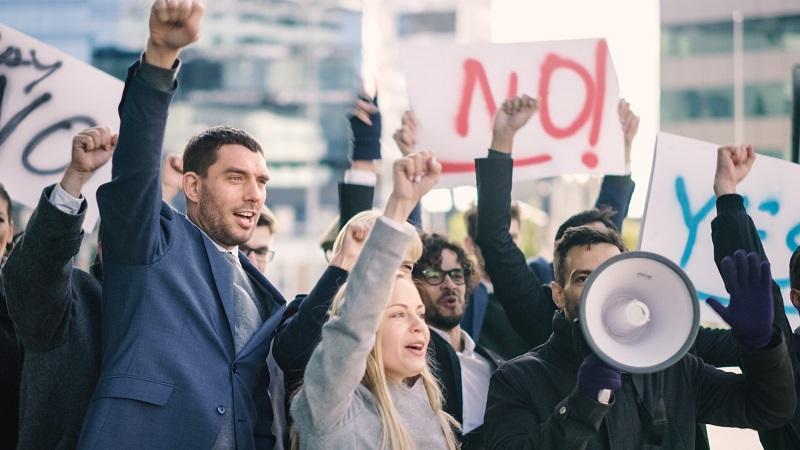
But we are also currently in a situation where we are seeing workers and their trade unions coming into disputes with their employers over their pay and conditions. A massive set of strikes across our economy is underway involving workers from the education sector to the health sector to the housing sector and beyond. I’m not old enough to remember a time when that was a regular occurence.
So why are things so fraught? Why on the one hand, when we see such a huge policy intervention as that being given directly to households to ease their living costs do we still have workers, who of course come from within these same households, make the decision to support strike action and to go on strike?
Is it that the impact of recent inflation and prices rises have seeped through and hit living standards so severely that the Government interventions are simply not enough?
One only need to look to the Republic of Ireland, where we are not seeing the same level of strike action or discord amongst workers The Republic of Ireland has been hit with a similar surge in inflation as the UK economy has and the Republic of Ireland’s direct interventions have been similar, if not more meagre, compared to those in the UK.
To understand what’s behind the current strike action we need to look at what has been happening in the labour market. Month on month we get these cheerful headlines almost applauding the state of our labour market in Northern Ireland. This is because our unemployment figures have remained comparatively low through the past few years of economic turmoil. What we dont talk about enough though is the quality of jobs within our labour market, and the fact that for workers they have already been living through a cost of living crisis, long before this current set of woes.
We hear a lot these days about how when we compare wages now to wages last year we see that there has been a substantive decline in the real buying power of wages. More simply, workers cannot afford the same living standards this year compared to last year based on the money they earned from their work. This, whilst remarkable, is not anywhere near as remarkable as the fact that when we look over the longer term, wages are almost exactly the same as they were 15 years ago. When we break it down and look separately at public sector workers and private sector workers, ASHE data shows that the real earnings of full-time workers in the public sector have seen no progression in 20 years. In the private sector, wages have never recovered from the financial crisis.
What all of this means is that many workers in Northern Ireland have spent the best part of their working lives working – and have seen no advancement in their living standards as a result. And this is why workers are demanding better.
This article appeared in the Belfast Telegraph on Tuesday 14 February 2023.